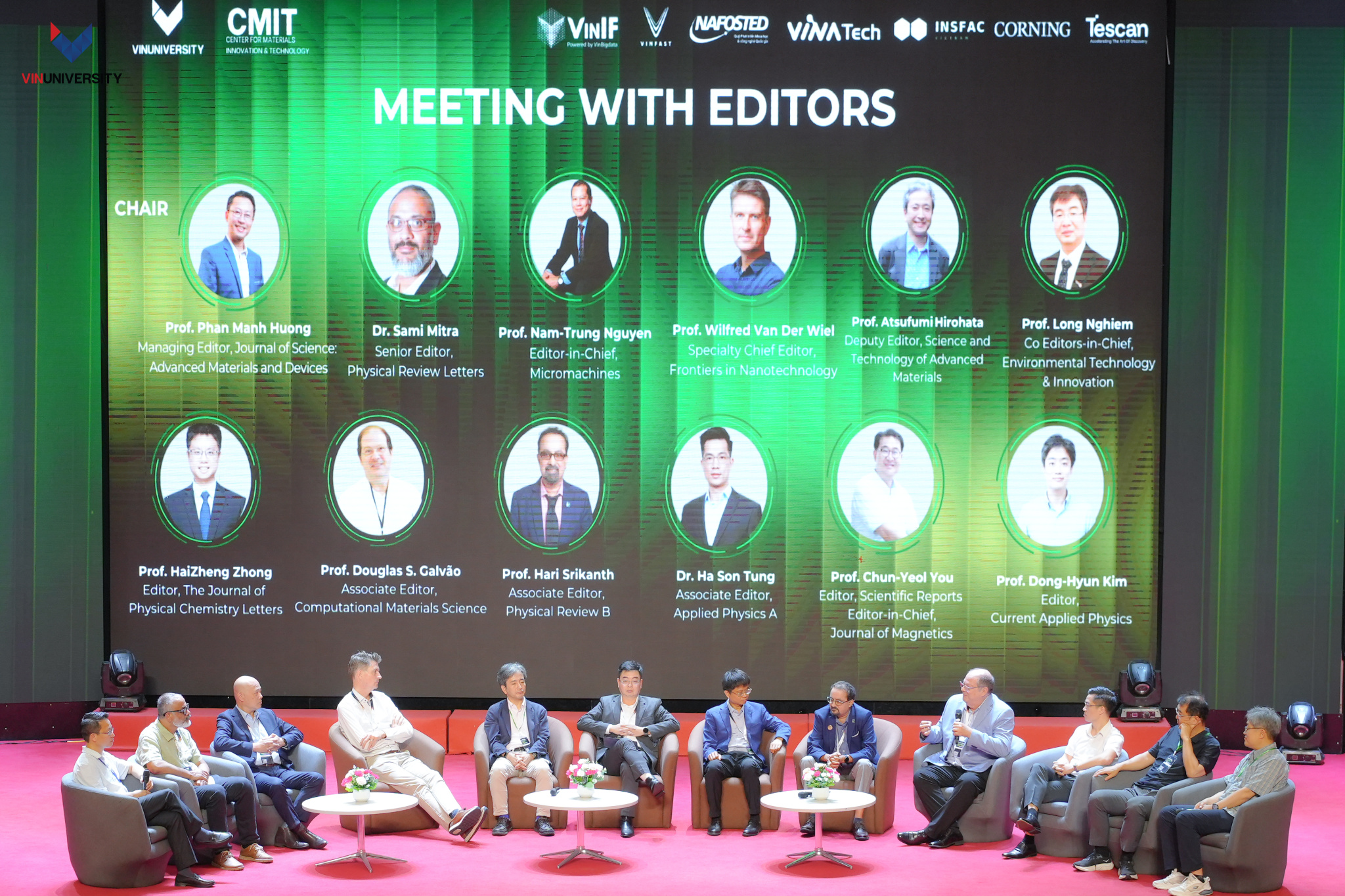
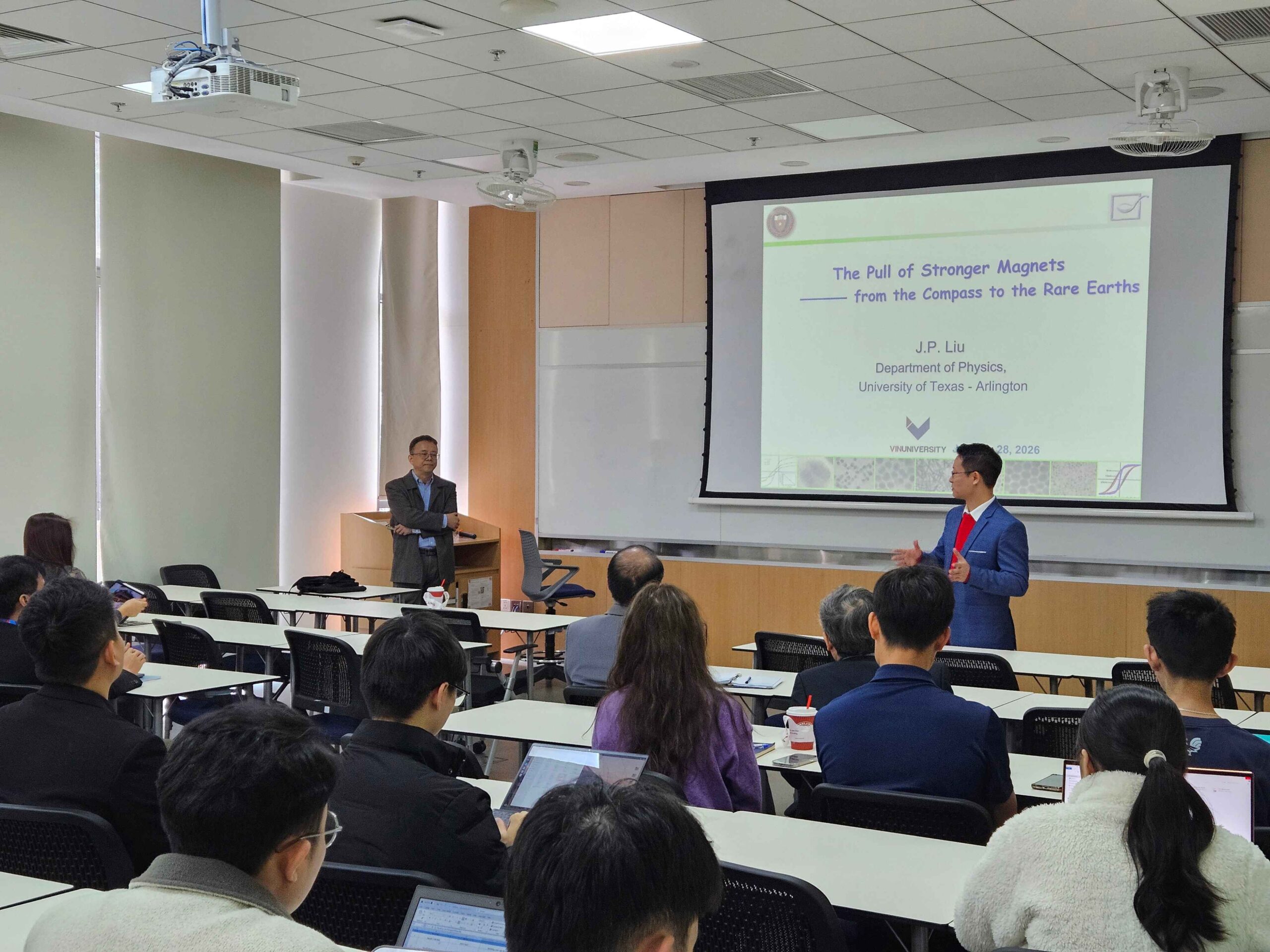
Hanoi, January 28, 2026 – The Center for Materials Innovation and Technology (CMIT) at VinUniversity was honored to host Prof. J. Ping Liu, a Distinguished University Professor from the University of Texas at Arlington, for an in-depth seminar on the critical role of magnetic materials in modern civilization.
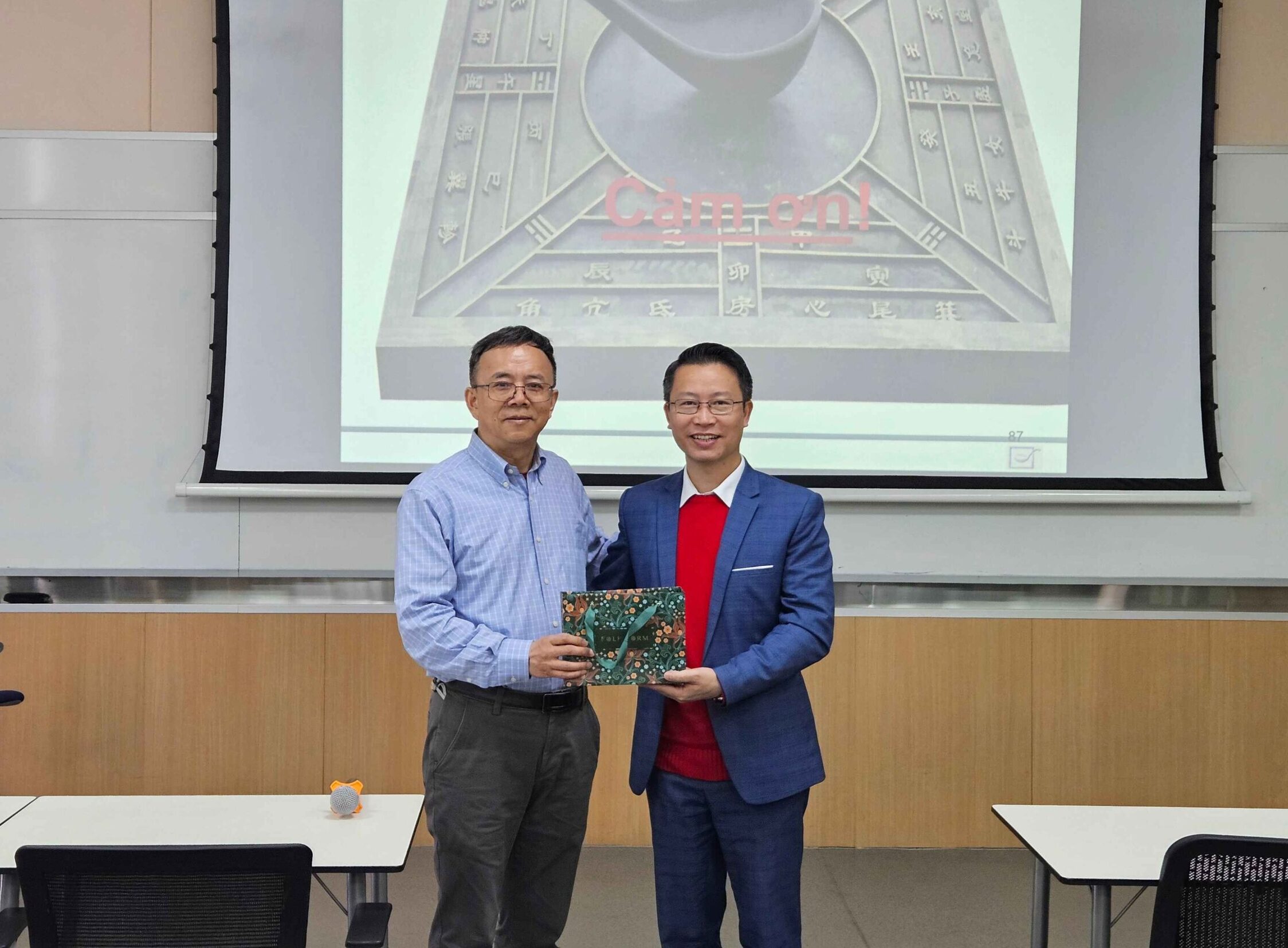
The Geopolitics and Science of Magnets
In his talk, Prof. Liu traced the history of magnetic materials from ancient compasses to the leap in performance achieved with the discovery of rare-earth-based permanent magnets in the 1960s. He emphasized that while these materials are essential for the AI era and the rapidly growing demand for electrification, the world faces significant challenges regarding the rare-earth supply chain—a major geopolitical concern.
From a technological standpoint, the key hurdle for heavy-duty applications, such as electric vehicles and wind turbines, is enhancing coercivity—the ability of a magnet to withstand an external magnetic field without becoming demagnetized.
Solving Brown’s Paradox with Nanotechnology
Prof. Liu shared insights from his pioneering work over the past two decades in nanoscale magnets. His research has led to significant discoveries in the synthesis of novel nanostructured hard magnetic materials.
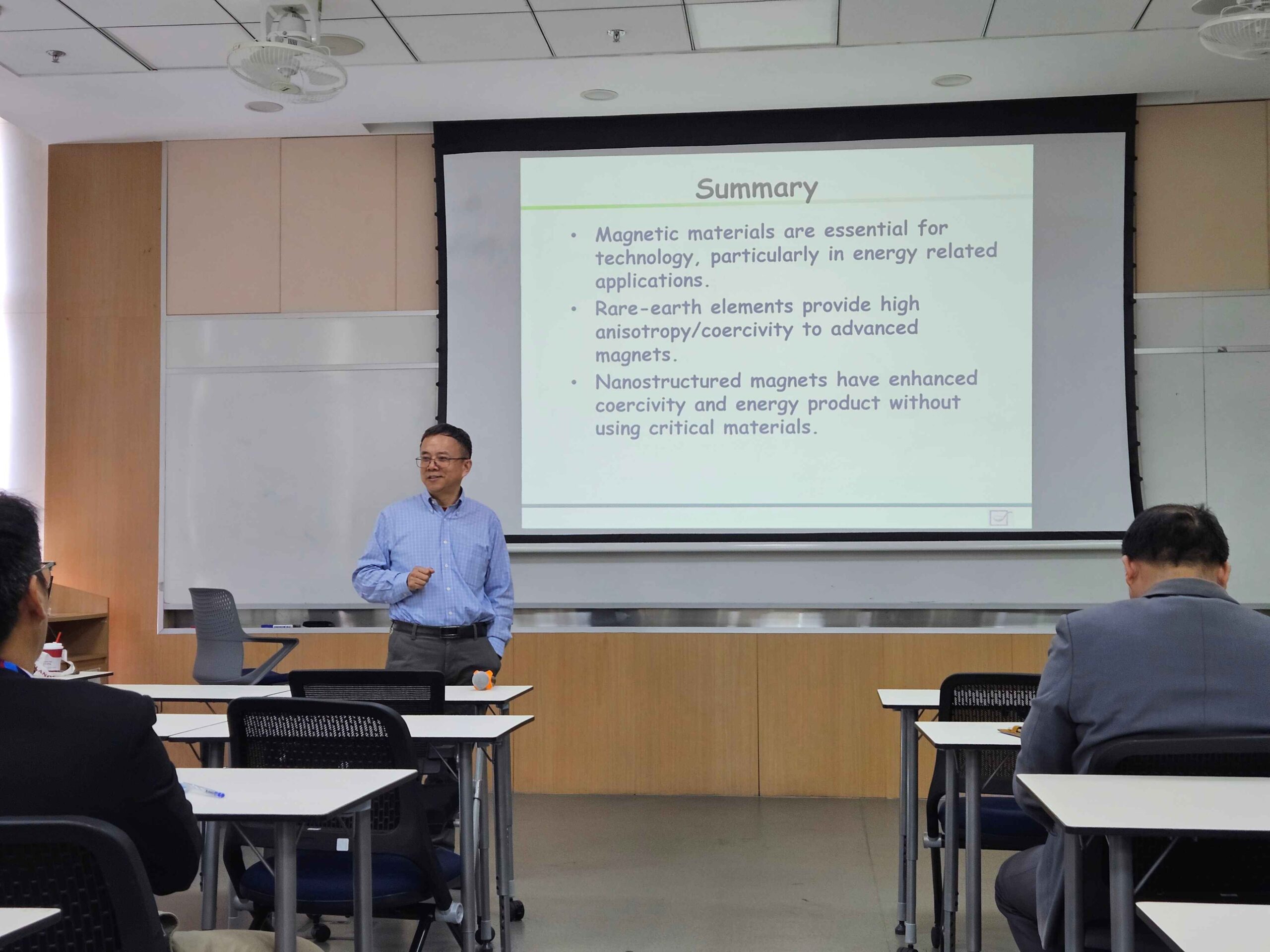
Notably, his team has provided an experimental solution to the long-standing “Brown’s Coercivity Paradox,” revealing that coercivity can be substantially enhanced in low-dimensional structures. He demonstrated that nanostructured high anisotropic magnets—including exchange-coupled nanocomposite magnets and nanowire-based magnets—possess tremendous technical and economic advantages, positioning them as the future of advanced permanent magnet applications.
About the Speaker
Prof. J. Ping Liu is a world-renowned expert in magnetic materials with a Ph.D. from the University of Amsterdam. Over the past four decades, he has worked across China, Europe, and the USA.