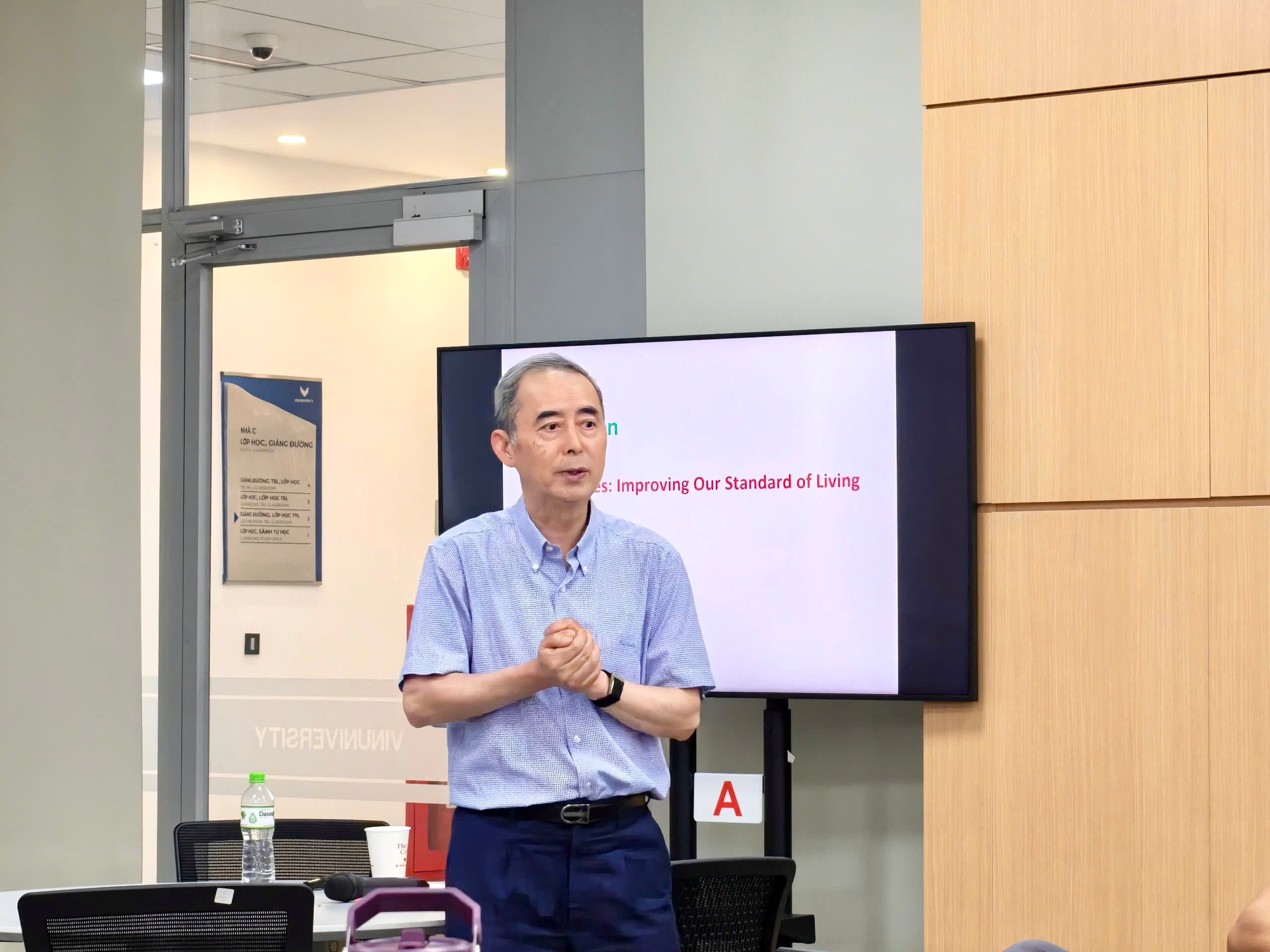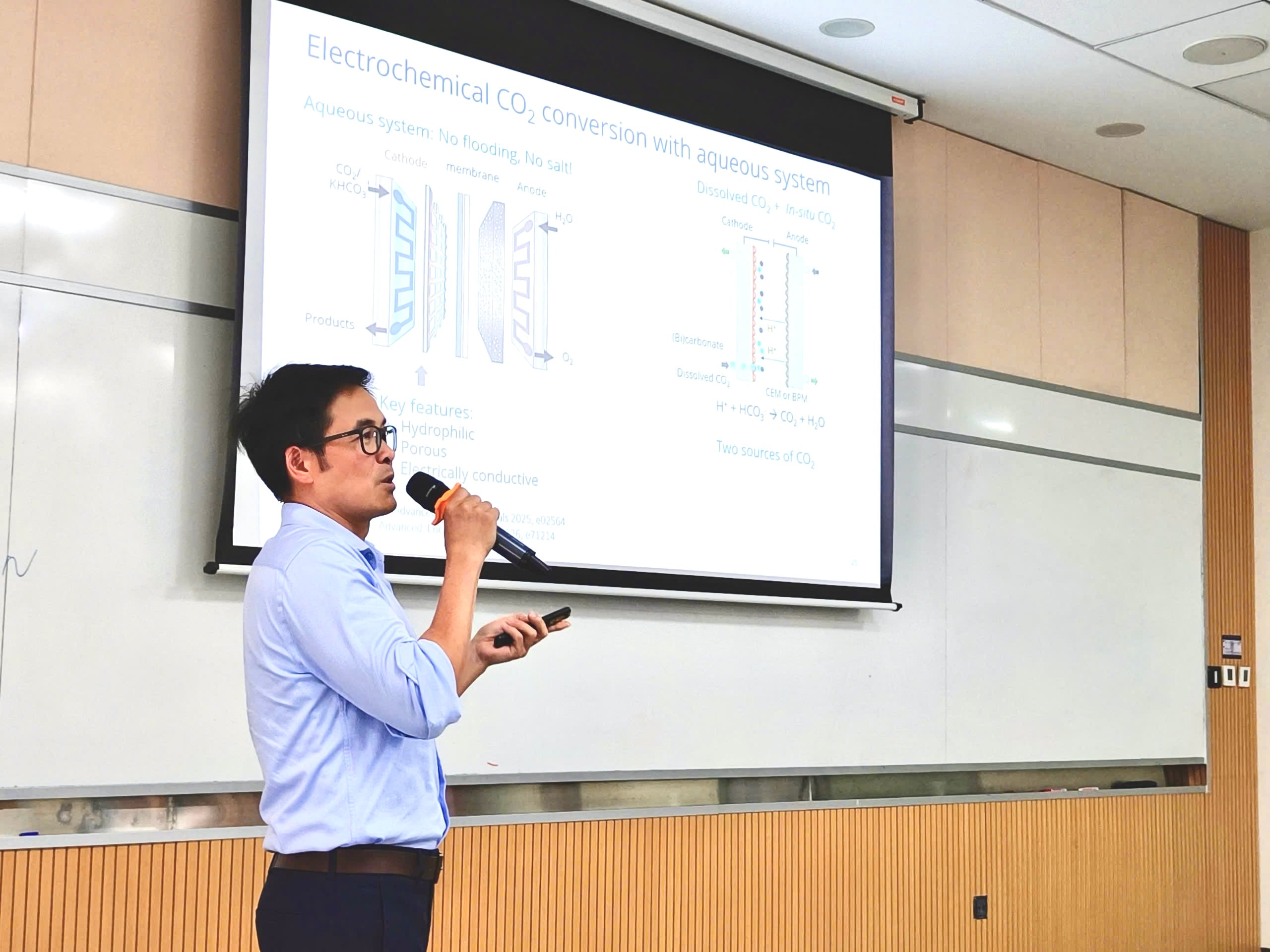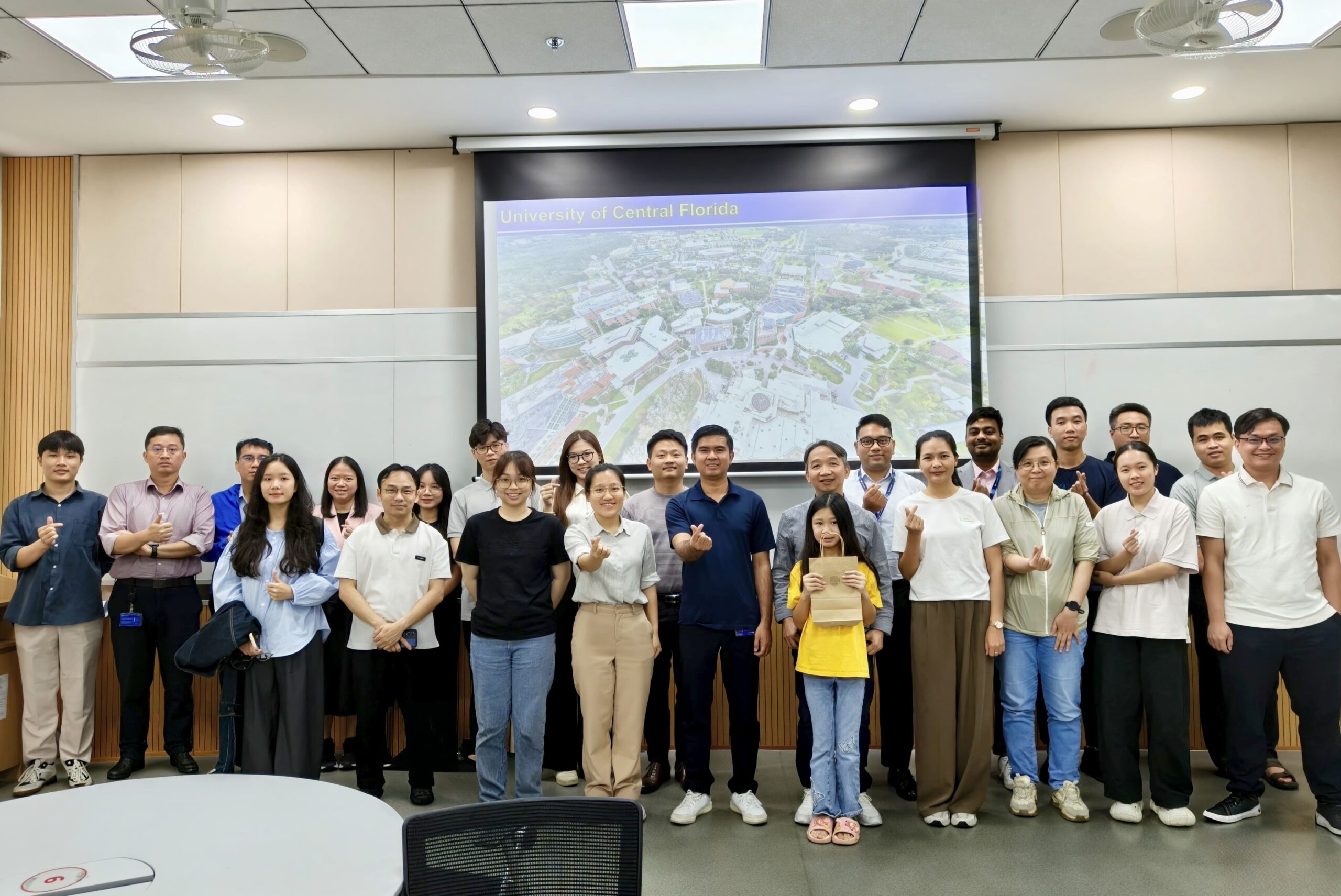
Hanoi, July 10, 2026 – The Center for Materials Innovation & Technology (CMIT) at VinUniversity was honored to welcome Prof. Duy Le, Department of Physics, University of Central Florida for an insightful academic seminar. The seminar explored how electrolyte cations govern electrochemical reactions and highlighted recent advances in computational electrochemistry that allow first-principles simulations of complex liquid-solid interfaces.
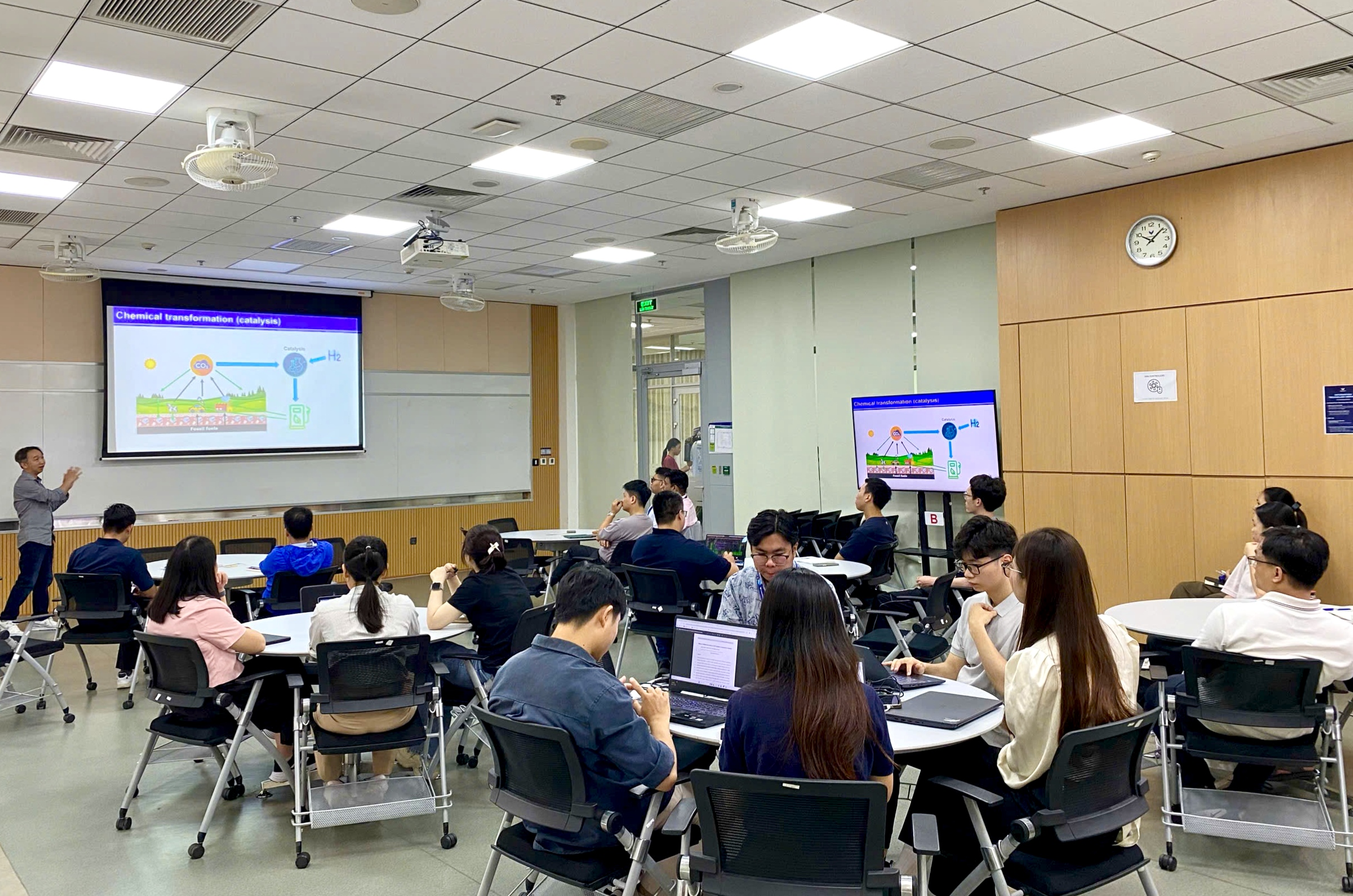
During his presentation, Prof. Le shared his research findings on the influence of non-metal cations on electrocatalytic reactions. He demonstrated that ammonium-based cations can enhance CO₂ electroreduction on bismuth electrodes, alter the reaction mechanism of CO₂ reduction on the molecular catalyst cobalt phthalocyanine (CoPc), and improve hydrogen evolution activity on Pt(111) electrodes, illustrating how tuning electrolyte composition can be used to steer catalytic performance.
The seminar also provided recent methodological progress in the field, discussing machine-learning-based approaches that make it possible to simulate electrocatalytic systems at length and time scales beyond the reach of conventional first-principles methods. Prof. Le outlined the advantages of these emerging techniques alongside the challenges that remain in their development, underscoring the expanding role of machine learning in the study of electrochemical interfaces.
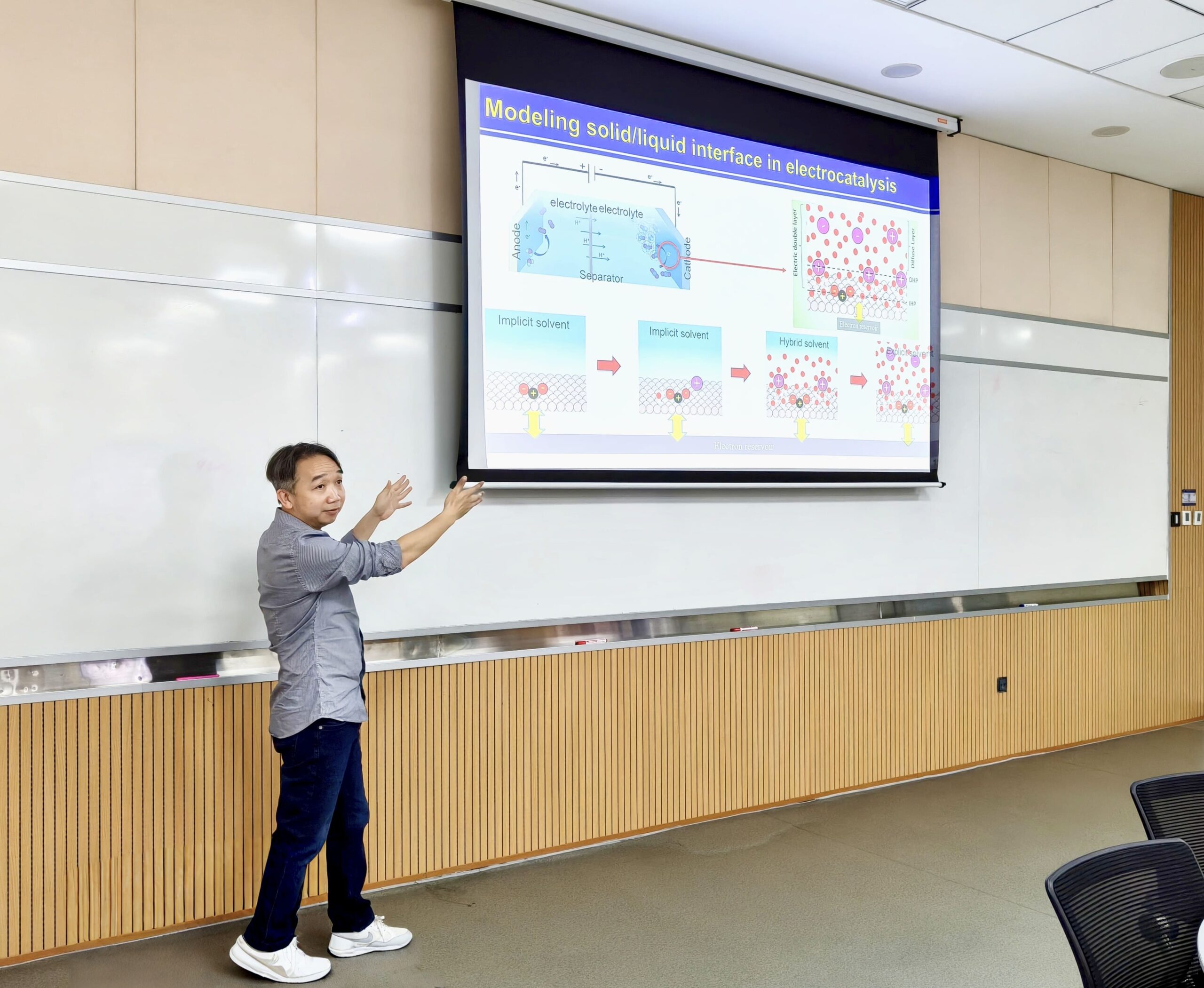
Prof. Le is an Assistant Professor in the Department of Physics at the University of Central Florida, where he also holds a secondary joint appointment with the Renewable Energy & Chemical Transformations Cluster. With more than a decade of experience in uncovering the fundamental behaviors of energy materials to design next-generation applications, his research explores a wide range of areas, including electrocatalysis, thermocatalysis, energy storage, as well as molecular electronics and quantum devices engineered for nanoscale technologies.