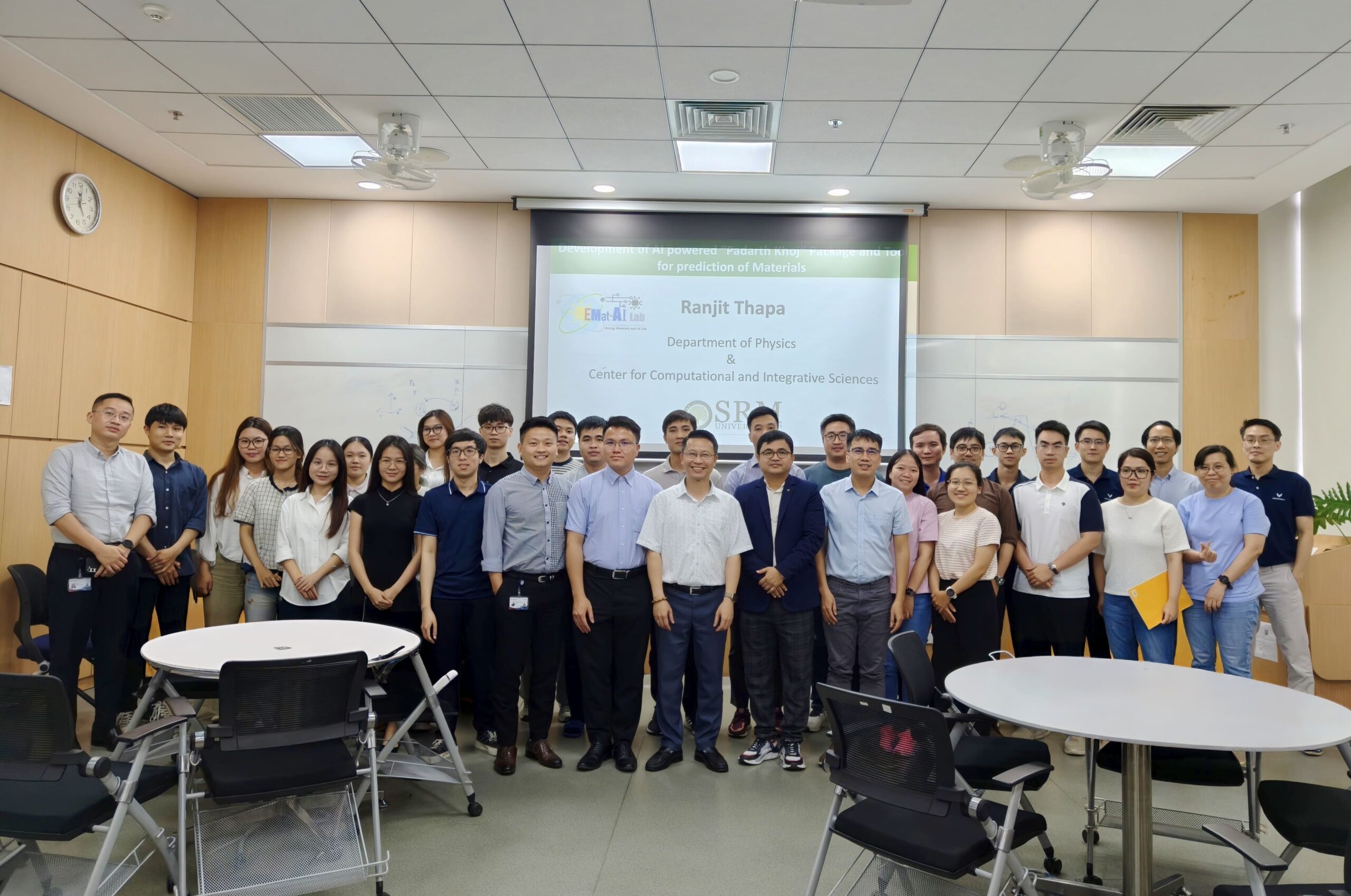
Hanoi, May 11, 2026 – The Center for Materials Innovation & Technology (CMIT) at VinUniversity hosted a guest seminar featuring Prof. Ranjit Thapa, SRM University-AP, India. The seminar explored recent advances in computational materials science and the application of machine learning to accelerate catalyst discovery.
During the seminar, Prof. Thapa presented his research group’s descriptor-based framework that combines electronic structure calculations with machine learning to efficiently identify high-performance electrocatalysts. He introduced “Padarth Khoj,” a machine learning-powered graphical user interface (GUI) developed to rapidly screen and predict bifunctional catalysts for the oxygen evolution reaction (OER) and oxygen reduction reaction (ORR).
The presentation demonstrated how integrating machine learning with density functional theory (DFT) calculations can significantly reduce computational costs while maintaining prediction accuracy. Using the proposed framework, the research team generated approximately 8,000 overpotential predictions using only 80 DFT calculations, compared with the roughly 24,000 calculations required by conventional approaches. The seminar highlighted the growing role of artificial intelligence in accelerating materials discovery for sustainable energy applications.
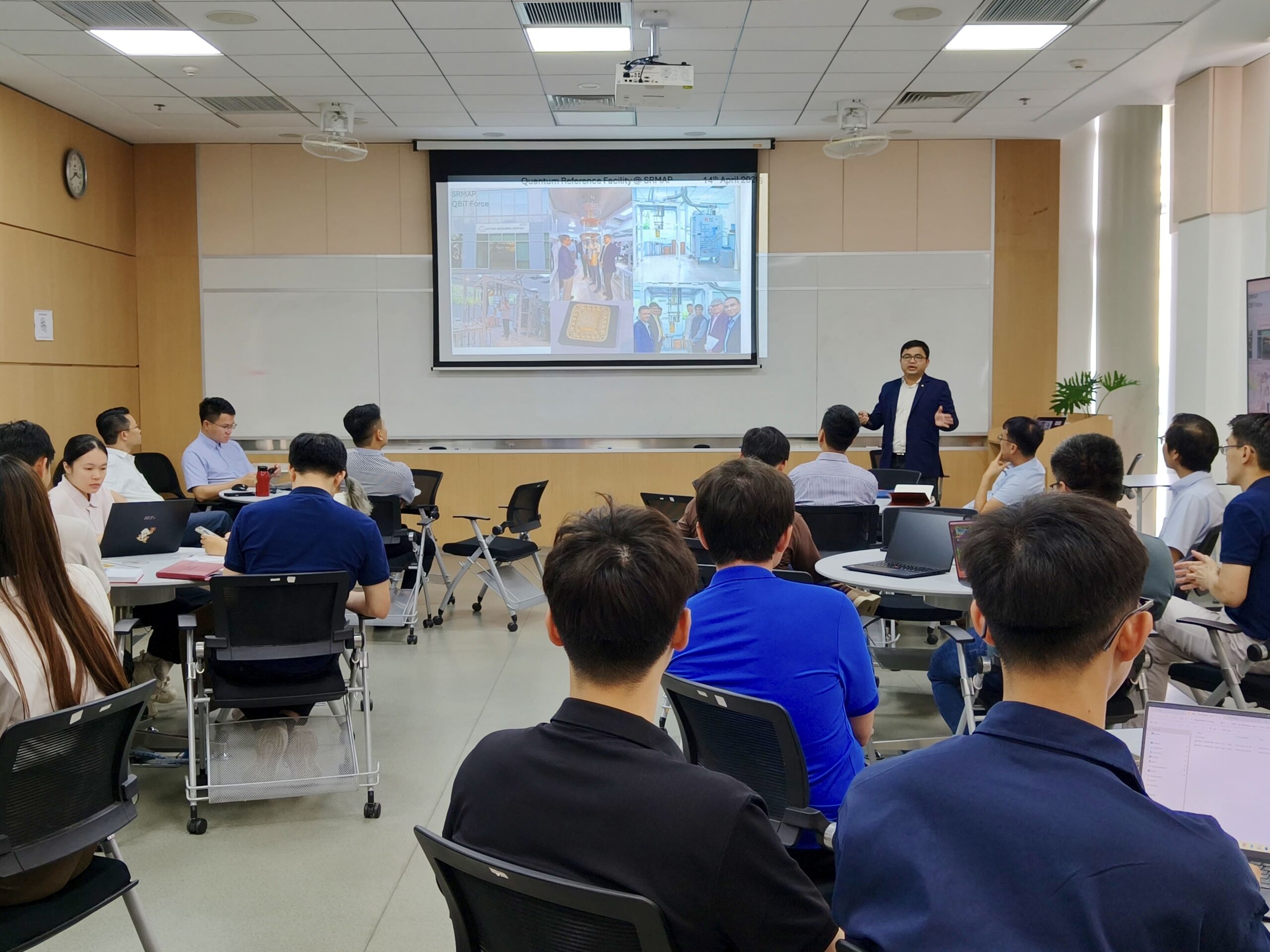
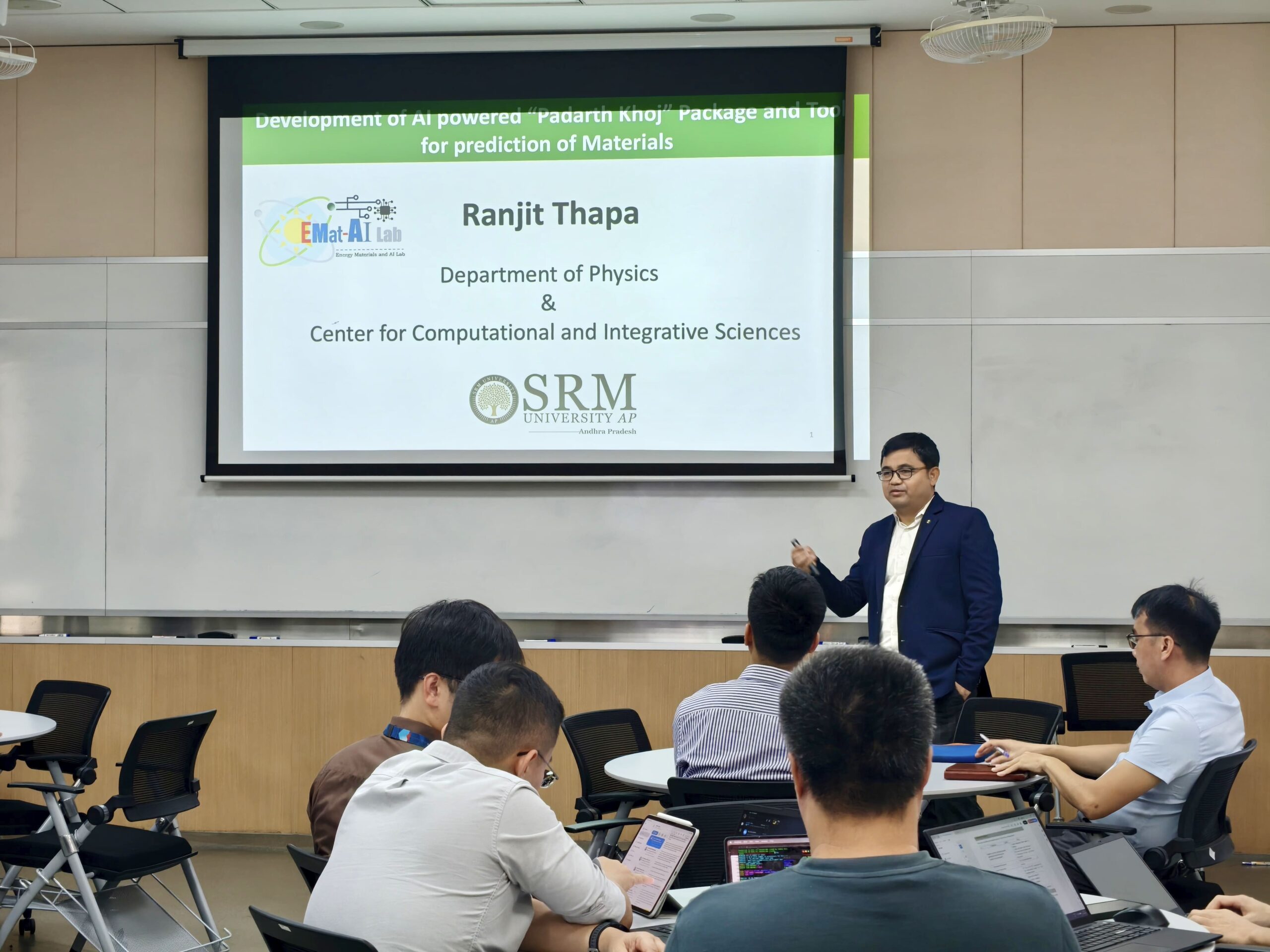
Prof. Thapa is Dean of Research and Full Professor at SRM University-AP, India. With more than two decades of experience in computational materials science, his research focuses on first-principles calculations, electronic structure theory, machine learning for materials discovery, and the design of advanced functional materials for energy and catalytic applications.